Some hasty notes — but very sincere — about CASCA-Cuba 2018
Cultureblog
Niurka Núñez González, Lázara Y. Carrazana Fuentes, Adrián Fundora García, María del Rosario Díaz Rodríguez, Research project "Sociocultural Anthropology in Cuba: Reconstructing the Past to Build the Future." Juan Marinello Cuban Institute of Cultural Research/Cuban Institute of Anthropology
Esteban Krotz, one of the protagonists in debates about "peripheral" anthropologies, reflects in one of his articles on the North-South metaphor used to mark global economic and sociocultural differences, extended to the boundaries between the traditional European and U.S. authorities of the discipline and the "anthropologies of the South." In this regard, although the focus of his analysis is precisely the latter, he draws attention to the fact that, in reality, almost all anthropology produced outside the "countries of origin of anthropological science" is ignored, even by its own practitioners.
Immersed in research that seeks to uncover the historical and current trajectory, in Cuba, of an original anthropological thought that has aimed to explain sameness—or, from an external perspective, our own colonial, neocolonial, or postcolonial "otherness"—and internal cultural diversity, as well as its integration into the process of nation-building, we could not avoid drawing parallels during our participation in the CASCA-Cuba conference: Canada, a northern country but also one with a colonial history, does not rank among the "owners" of anthropology.
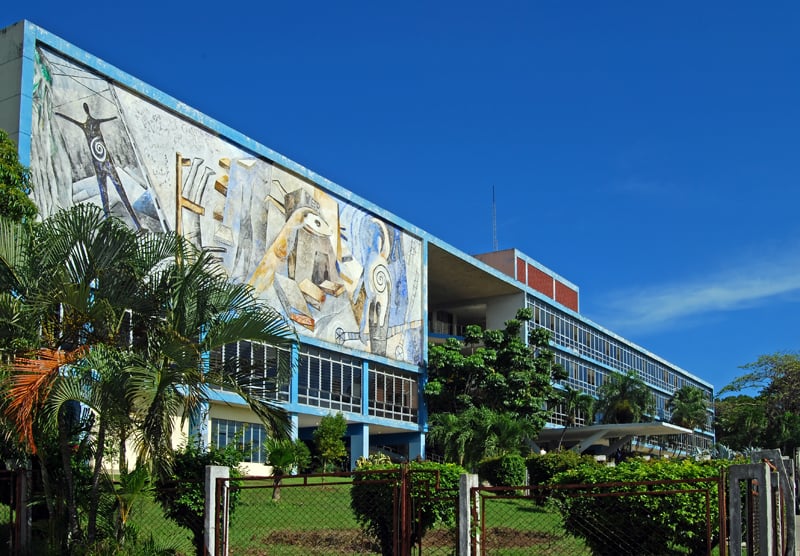
However, as the congress showed, the vitality of the discipline in its domains is undeniable, evident in the multiplicity of topics, approaches, and novel proposals that filled the spaces of the University of Santiago and Dranguet House. Hence, the inevitable parallel: we are united by the imperative to recover, exchange, and disseminate the history of our "history-less" anthropologies, and even to do the anthropology of our national anthropologies.
The proposed counterpoint was further enriched by the event's drawing power, which attracted specialists from other places, expanding the opportunity to share "multiple voices of knowledge."
There was virtually no major issue of contemporary societies and cultures that escaped analysis, and at the same time there was representation of virtually all the subdisciplines and tendencies into which anthropology fragments today, including examinations and questioning of its own history, its theories and its practices, both research and applied.
Unfortunately, as with any event of this nature, after a difficult selection process one manages to participate in only an infinitesimal fraction of the sessions, even though academic exchanges and mutual learning continue beyond them. For us in particular, it was extremely fruitful to present partial results of ongoing research for debate, a discussion from which we emerged armed with other perspectives and diverse points of view, and also with unexpected challenges and tasks—an incentive to deepen our inquiries.
We owe the conference a reunion with some friends and new acquaintances. Paradoxically—though not so much, if we follow the statement cited in the first paragraph of this piece—thanks to CASCA we also strengthened contacts with colleagues from Santiago. The very center-periphery internal dynamic (our "north" and our "south") that characterizes almost all Latin American countries, distancing the capital city from the rest of the urban fabric, not to mention the rural territory, means that in Havana the richness of intellectual production from other parts of the Island is often unknown. Although our team has consciously resolved not to be swept along by that contradictory situation, other factors that hinder mobility and relations among researchers—on which it is not worth elaborating here—sometimes prevent us from closer and more comprehensive exchange.
That the event took place in Santiago de Cuba was, in itself, a trump card in its favor. The city shines, and the warmth of its people, well known as it is, still envelops the visitor wherever they are. Both in the event spaces, in the accommodations, and in walks around the city, we felt at home, something that cannot go unmentioned, even if this short text becomes a hybrid between brief strokes of scientific reflection and expressions of gratitude and recognition toward all—Cubans, Canadians, or anyone else—who collaborated in the successful development of the conference and in providing us with a pleasant and unforgettable professional and personal experience.