Rethinking resilience in anthropology
Cultureblog
By Gabriella Santini, University of Ottawa
Resilience is often understood as the capacity of a system to absorb disturbances and to reorganize into a fully functioning system (Cutter et al. 2008, 599). It is also the ability to bounce back with minimal losses and disruptions after a disaster (Barrios 2016, 28). These definitions highlight two typical characteristics when thinking about resilience: first, the capacity to absorb stress so that the system can continue to operate, and second, being able to do so with as little damage as possible. However, if we imply in anthropology that everything is 'becoming' (Biehl and Locke 2017)—that is, in perpetual change—how can we think that a system can 'bounce back' to its pre-disturbance state? This is the first problem with common understandings of resilience.
The second gap is that such a conceptualization of resilience shifts the burden of the consequences of risks onto affected communities and diverts attention from the root causes of disasters—often colonialism and capitalist development (Barrios 2016). In other words, it merely reproduces unequal power relations. Indeed, this kind of understanding perpetuates systems of oppression, because it does not seek to problematize or resolve the source of the so-called risks. Instead, it expects affected individuals to adjust their lives in order to continue functioning at a so-called "acceptable" level, although this idea remains vague. Take for example the Hyogo Framework for Action (Hyogo Framework for Action, 2005–2015), the primary instrument used by United Nations member states to reduce disaster risk. It conceptualizes resilience as the capacity of a system to adapt to risks by resisting or changing to reach and maintain an acceptable level of functioning.
We must recognize that neoliberalism itself is a resilient system. It survives by subjugating minorities and then urging them to be resilient. This same system funds social science researchers, such as specialists in resilience and disaster mitigation, who perpetuate violence by measuring the level of resilience of groups victimized by disasters caused by extractive, toxic, and/or colonial industries (Barrios 2016). This logic assumes that a community that is unable to restore itself to an acceptable level of functioning after a disaster is lacking of resilience. Such a theory of resilience, according to Barrios (2016), reduces to a logic that blames victims rather than the system that produces vulnerability. Furthermore, when communities strive to become resilient to the stressors of an oppressive system, they preserve the conditions that contribute to the reproduction of a disaster-generating system (Barrios 2016, 32).
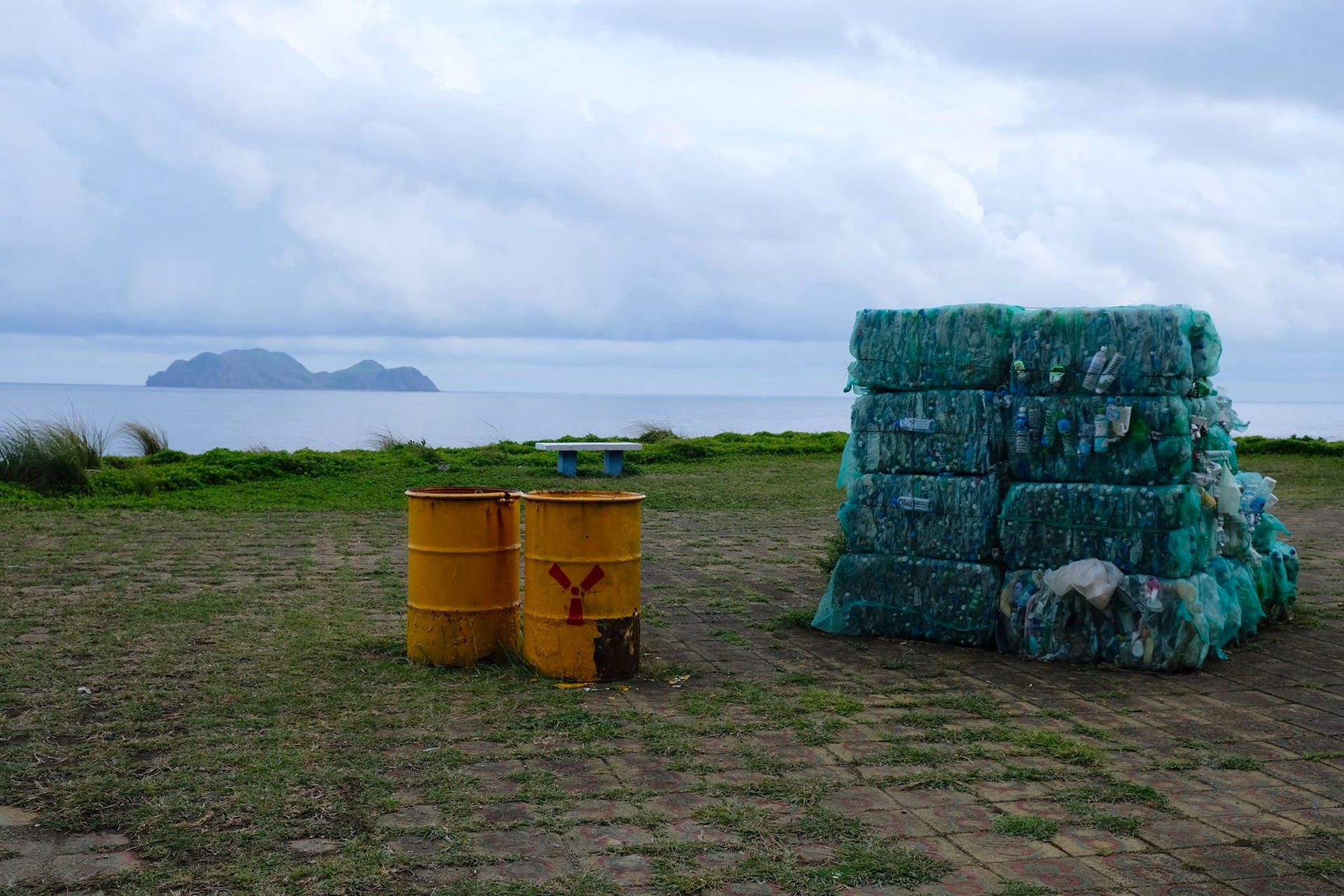
I became aware of the shortcomings of the concept of resilience following my fieldwork on Orchid Island, Taiwan. I conducted field research among the Yami, an indigenous group facing ecological transformations driven by modern capitalist activities on their ancestral territory, notably tourism and the storage of nuclear waste. Even if they are resilient, it would be impossible for the Yami to "bounce back" or return to a pre-disturbance state, that is, a state prior to the arrival of radioactive waste and tourism. First, their territory was physically changed—the radioactive waste, pieces of plastic, and the cement used to build roads and guesthouses are durable (and resilient!) materials that persist beyond a human lifetime. Second, the Yami have become accustomed to a way of life that resembles that of their Taiwanese neighbors and which would now be difficult to abandon.
Moreover, we must not forget that the plastic and radioactive pollution on Orchid Island was not created by accident; it is the product of a long history of colonial encroachment and capitalist industrialization. Modern capitalist activities were introduced on the island by external actors, particularly the Taiwanese state. It is therefore important, as anthropologists, not to depoliticize the processes that produce vulnerability and not to hold individuals and communities responsible for disasters they did not create.

I therefore propose to analyze resilience in the entirety of the system, that is, the affected communities, but also the governments, corporations and industries that are at the heart of the problem. We must also think of resilience as a continual learning process that makes room for the new, rather than a process by which a system returns to its "normal" state. Rethinking the concept of resilience in this way, I reoriented my research toward the factors that generate vulnerability among the Yami rather than on how islanders could better adapt to their changing situation. Rather than expecting a disinterested neoliberal system to stop the activities that create vulnerability, it is appropriate to study practices of resurgence rather than resilience, that is, the process by which Indigenous peoples can achieve self-determination through cultural renewal and systemic change, rather than resilience (Coulthard 2014).
Featured image by Gabriella Santini
Bibliography
Barrios, Roberto E. 2016. "Resilience: A commentary from the vantage point of anthropology.", Annals of Anthropological Practice 40 (1): 28–38. https://doi-org.proxy.bib.uottawa.ca/10.1111/napa.12085
Biehl, Joao, and Peter Locke, ed. 2017. Unfinished. Anthropology of Becoming. Durham: Duke University Press.
Coulthard, Glen. 2014. Red Skin, White Mask. Minneapolis: University of Minnesota Press.
Cutter, Susan. L., et al. 2008. “A Place-Based Model for Understanding Community Resilience to Natural Disasters.” Global Environmental Change 18 (4): 598–606.
Deborah, Davis Jackson. 2011. “Scents of Place: The Displacements of a First Nations Community in Canada.” American Anthropologists 113 (4): 606–18.
Santini, Gabriella. 2019. "Profit or ecology? Double bind and Yami resilience." Bulletin Culture, CASCA, October 18. https://cascacultureblog.wordpress.com/2019/10/18/profit-ou-ecologie%e2%80%89-double-contrainte-et-resilience-yami/
United Nations International Strategy for Disaster Reduction. “Hyogo Framework for Action 2005–2015: Building the Resilience of Nations and Communities to Disasters.” https://www.unisdr.org/files/1037hyogoframeworkforactionenglish.pdf