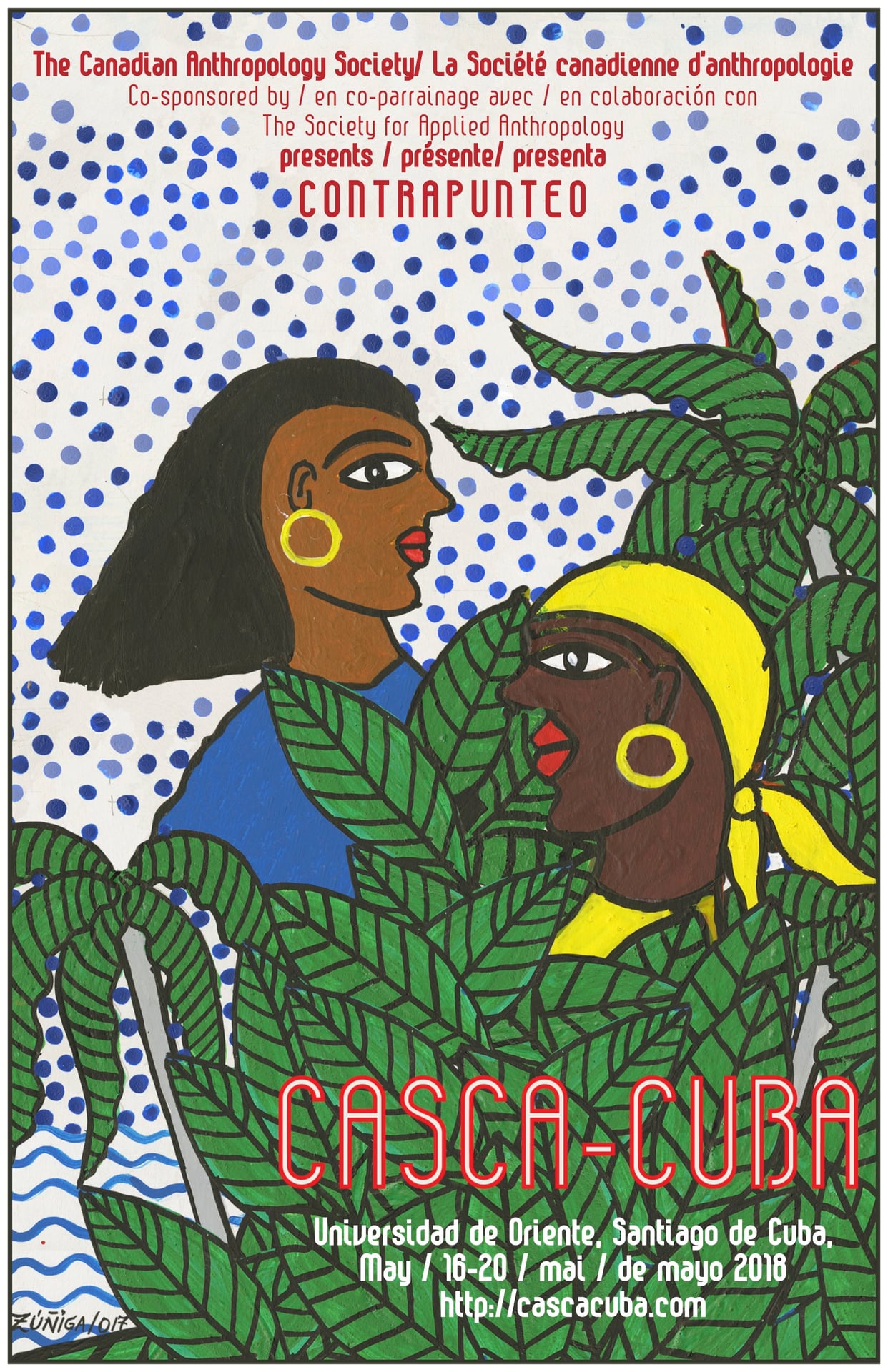
Seven reasons to come to the CASCA annual meeting in Santiago de Cuba
Cultureblog
by Van Troi Tran, Laval University
For the first time in its history, in 2018 the annual CASCA meeting will move to Cuba. We will be hosted at the Universidad de Oriente located in Santiago de Cuba from May 16 to 20.
As with any first, the prospect of going to unfamiliar terrain for most of us is very exciting, but perhaps somewhat worrying. For those of you who, for one reason or another, are still hesitating to join us for this event on the largest island of the Antilles, we have compiled in this short item seven reasons to come to the next annual CASCA meeting in Santiago de Cuba.
The venues

Santiago de Cuba is the second most important city in Cuba, located in the southeast of the island. Beyond its beaches and enchanting scenery for lovers of seaside tourism, the city also hosts, through its steep streets and colonial-era buildings, several points of interest that testify to its rich history.
The Castillo de San Pedro de la Roca (El Morro), built in the 17th century, overlooks the bay. This monument was declared a World Heritage Site by UNESCO in 1997 because of the quality of its preservation and its typical character of military architecture. It is at this majestic location that the conference closing dinner will be held. Santiago de Cuba was also the scene of major events of the Cuban Revolution. It was on the balcony of the city hall, in front of the central park that Fidel Castro proclaimed the beginning of the Cuban Revolution on the 1st January 1959, and it is also in the Santiago de Cuba cemetery that Fidel Castro, and the hero of all Cubans, José Marti, were buried.
The stay
The conference will take place mainly on one of the campuses of the Universidad de Oriente which is celebrating its 70th anniversary this year. The university is located on the outskirts of the city center which is easily accessible in about a 30-minute walk (and a few sweats…). The Meliá Santiago hotel, where the welcome reception, the general assembly, and the women's network dinner will be held, is located opposite the university (a 5-minute walk). The hotel offers a comfortable lobby to meet and cool off (air-conditioned), a beautiful pool, and a bar with a view over the whole city of Santiago. In collaboration with the Centre for Imaginative Ethnography, a program running parallel to the conference will include symposia, exhibitions, music performances, a film festival, and performances. These activities will take place at Casa Dranguet, a cultural center located downtown that works, among other things, on the study and promotion of coffee culture.

The organizing committee is working with the travel agency Club Aventure Sherbrooke which will offer travel packages including the plane, ground transportation, the hotel and a short beach stay (details to come at the end of October). The package option including the Meliá Santiago hotel will certainly be the most convenient. For those who wish to explore and go on an adventure, the city is full of casas particulares (or B&B) located near the University and/or downtown.
The activities

Within the more specific framework of the CASCA conference, several activities will be organized.
The conference banquet at the historic El Morro Fort will offer guests a restaurant view that is breathtaking in addition to a Cuban music show. the CASCA Weaver-Tremblay Prize will be presented in a historic room of the Emilio Bacardi Museum, located downtown in Santiago. Groups and research centers including the Fernando Ortiz Center for African Culture will offer dance and percussion workshops.
Santiago de Cuba is a very culturally rich city. It is the birthplace of several musical styles that combine elements of Hispanic and African origin, including the son, the ancestor of salsa, and the trova, or the conga. Located downtown in Santiago de Cuba, the Casa de la Trova, a legendary venue for lovers of dance and traditional Cuban music, offers concerts every evening. Other nighttime activities will also be organized in the city's festive centers.
A different kind of conference

For 2018, CASCA intended to repeat the positive experience of organizing the conference outside Canada, which already dates back to the Merida conference in Mexico held in 2005, by stimulating new encounters and collaborations and by opening up to new perspectives beyond Euro-American hegemony. While Cuban research is today in full effervescence in many fields, CASCA has chosen to participate in this movement, in order to pursue a process of decolonization and mutual opening of cultural and linguistic borders in anthropology.
For our Cuban hosts at the Universidad de Oriente, CASCA-Cuba will be the first event of this kind and they are very proud and very happy to welcome us.
The technological detox
Particular to this year, speakers will not have access to wifi, mobile networks and perhaps not technological equipment for their PowerPoint presentations. No matter. As every good anthropologist must embrace risk and accept discomfort, this conference will be an opportunity to shake up habits, to practice scientific meetings differently, but above all to invite us to create and invent new formulas for scientific exchange and communication.
No online networking, but more networking
Also, is it necessary to remind: these restrictions on access to a virtual network can also open up more networking opportunities. The Society for Applied Anthropology (SfAA), which co-sponsors the conference will be present, and by adding Spanish to the languages of presentation, the conference will also be able to count on the participation of many researchers outside North American scientific networks.
The conference theme
Finally, the theme selected for the next CASCA meeting is contrapunteo, a polyphonic term whose musical references will set the rhythm of reflections. Behind this concept lies the idea of bringing together different currents, influences, people, in order to form a new harmony, a new meaning, but without abandoning our own identities and origins. It is the idea of coming into contact and exchanging, of learning from the other to form new opportunities.
We hope to see you soon in Santiago de Cuba!