A village to raise children, children to raise a village
Cultureblog
By Olivia Roy-Malo, Laval University
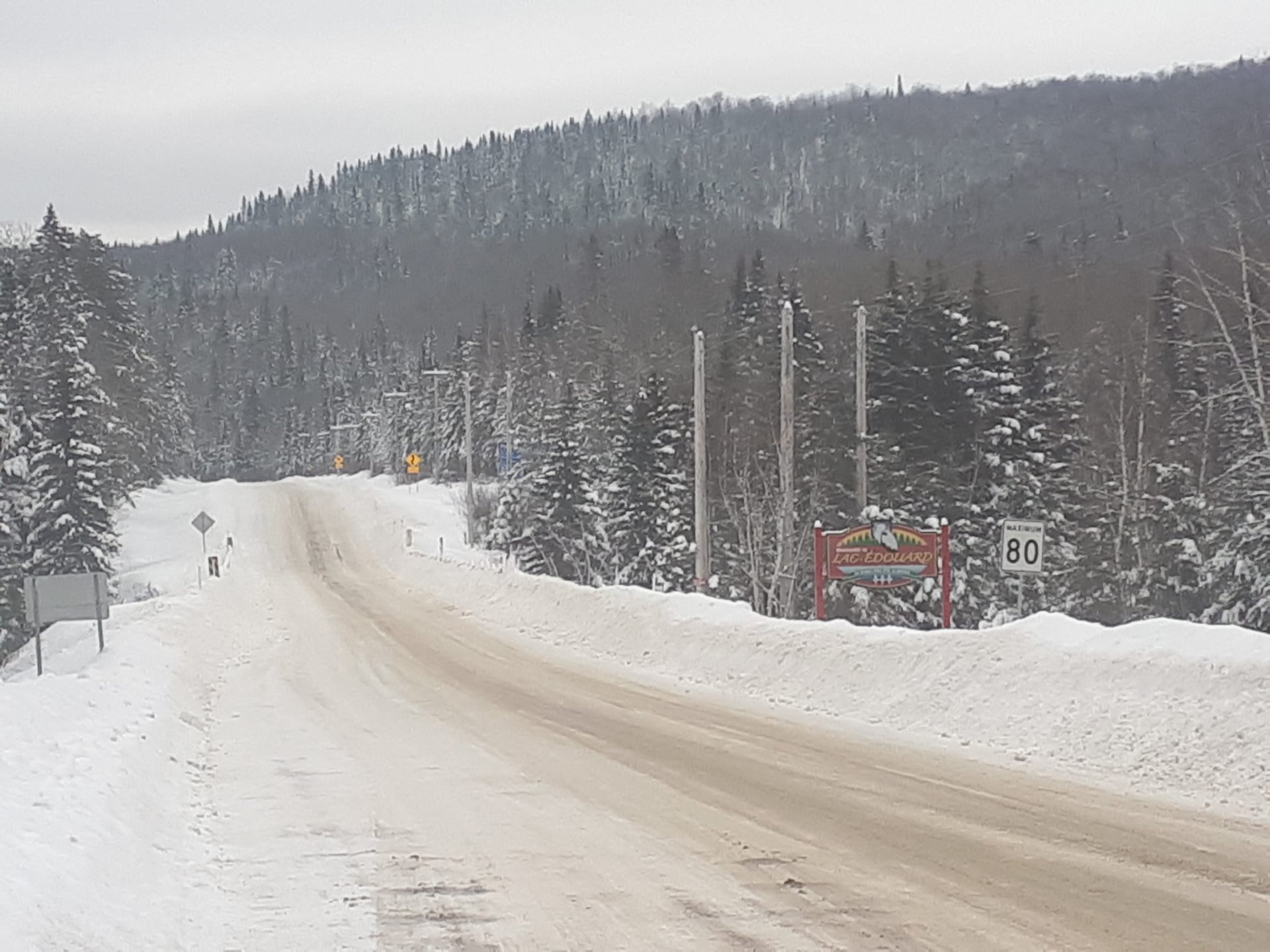
During a research stay in Lac-Édouard, a small isolated village in a rural Quebec region, a resident shared with me her memories of a citizen mobilization that took place in the 1990s to keep the village school open: "We worked a lot because, in small communities, you always have to defend yourself. Always. You always have to fight for what you have." At the time, the parents prevailed. Unfortunately, ten years later, the school closed its doors. In 2008, a new group of parents who wanted their children to receive a local education launched the Petite école initiative. This model, inspired by home schooling, brings together volunteer teachers who wish to get involved with the children and contribute to the dynamism of their community. For more than 10 years, these people have invested themselves in this educational enterprise; they succeeded in obtaining funds and today the Petite école is recognized as a pilot project by the school service center (CSS), which allows them to host a part‑time teacher. However, the fear that the CSS will withdraw its support persists. Last year, five young people attended the Petite école. This year, there are only two. Without school services in the village, there is little chance of attracting new families and without new families, the future of the Petite école seems fragile.
A similar story is unfolding in Saint‑Elzéar‑de‑Témiscouata, a region known as a stronghold of rural resistance in the 1970s. Three years ago, the school found itself at the critical threshold of 12 students. The government does not intend to subsidize primary cycle institutions below that number. The CSS officials, the school administration and the municipal council then met to develop attractiveness strategies. The idea of a community‑oriented entrepreneurial school was chosen by the teaching team. Nicknamed the C‑FIER, this initiative invites children to engage in projects that reflect their passions while redeploying these activities within their community. In this case, the desire to generate new enthusiasm around the school mixes with pedagogical aspirations. For many stakeholders, the C‑FIER represents an opportunity to explore other educational models. In the project's second year, the school managed to attract about ten students in total. The threat of closure seems to be gradually fading.

In 2018, Sainte‑Lucie‑de‑Beauregard, a village near the U.S. border, sought to take on a similar challenge. After the school's activities were suspended because of too few enrollments, a maintenance committee made up of parents and municipal councillors conceived the beginnings of a school project focused on outdoor learning. Their plan included a complete redesign of the schoolyard to introduce trails, a community garden, and an obstacle course. Located at the heart of the Parc régional des Appalaches, the municipality is known for its surrounding nature and adventure tourism. The committee wanted the school to reflect that. In 2019, following a forecast study, the CSS decided to permanently close the institution.
These stories repeat across many rural territories in Quebec. Designated by the Ministry of Education and Higher Education (MEES) as "small schools," these primary cycle institutions with fewer than 100 students contend with the consequences of transformations in rural regions caused, among other things, by a significant demographic decline and a restructuring of economic sectors (ISQ 2019). Through the implementation of pedagogical initiatives, my doctoral study examines, in this context, how groups of actors invest, or not, these small schools as a social and political project. How does the school become, or not, a place "of doing together"?
Without addressing the notion of resilience head‑on in my research, the projects studied evoke a capacity, or at least a willingness among actors, to act in the face of an uncertain horizon or to (re)deploy collective actions in the face of persistent difficulties – the erosion of local services, youth outmigration, and an aging population. Keeping the school is added to local development strategies within these municipalities, to efforts to sustain a dynamic social and cultural life. As one participant notes: "If you want something here, you have to invent it and you have to create it." While this can spark enthusiasm in some people, others will be weary of carrying out this mobilization work. A lack of successors intensifies this feeling. Nevertheless, many of these communities demonstrate a strong philosophy of autonomy. Some of these municipalities seek to design their own tools to face the difficulties they encounter. It is also from this perspective that some contribute substantially to the funding of educational activities.
In these configurations, the school institution takes on different social roles. It is both a place for the transmission of knowledge and learning, and also a vector of local development for these small municipalities. Moreover, it is precisely from this dual perception that the debates surrounding school closures unfold (Carrier and Beaulieu 1995; CSE 2009). The pedagogical vocation, the challenges underpinned by a small number of students and resources, as well as the issue of socialization are arguments used by some actors to relocate children to larger schools. For others, the necessity of local education and the consequences of such a closure for the future of rural areas should be sufficient to consider other possibilities. This underlies a necessary question, that of the school as a public service and, thus implicitly, that of equity and accessibility for all. Should the government have the responsibility to support communities that decide to mobilize to maintain local school services? How does the trajectory of these schools fit into a context of eroding public services in rural areas? The questions raised in this text structure the beginning of my analytical work.
Featured image: Lac‑Édouard. Photo by Olivia Roy‑Malo, 2019.
Bibliography:
Carrier, Mario and Pierre Beaulieu, 1995. Small rural primary schools in Quebec: closure, maintenance or development?, Desjardins Chair in Small Community Development, Rouyn‑Noranda: University of Quebec in Abitibi‑Témiscamingue.
Quebec Council of Education (CSE), 2009. Report on the state and needs of education 2004‑2008. Education in remote regions: a collective responsibility, Government of Quebec.
Quebec Institute of Statistics (ISQ), 2019. Panorama of Quebec's regions. 2019 Edition, [Online], Quebec, The Institute, 162 p. [http://www.stat.gouv.qc.ca/statistiques/profils/panorama-regions-2019.pdf]