Cuban international cooperation in the time of COVID-19
Cultureblog
By Marie Michèle Grenon, Laval University
For several weeks, the COVID-19 pandemic has been spreading across all regions of the world and has caused the deaths of thousands of people. The speed at which the virus spreads means that some countries, even those with robust health systems, are facing saturation. This is notably the case of Italy which, faced with the rapid increase in the number of patients with COVID-19, turned to international assistance. The Cuban state was among the countries that answered the call by deploying, on March 22, a medical brigade made up of 37 doctors and 15 nurses in Lombardy. The Caribbean island sent similar aid to Suriname, Nicaragua, Venezuela and several Caribbean countries at the request of local governments. In such a context, it is worth asking what motivates a small, economically disadvantaged Caribbean island to deploy humanitarian aid abroad, and particularly to so‑called developed countries. Based on research I conducted during my master's and then my doctoral studies, I believe that Cuban cooperation can be explained by both pragmatic and ideological reasons.
From a political and economic point of view, the Cuban state remains relatively isolated, notably because of the US embargo and sanctions against it. In addition, in recent years several of Cuba’s political allies in Latin America and the Caribbean have lost power or are in difficulty, notably Venezuela. It is also to be expected that the COVID-19 pandemic will affect the island’s economy since the Cuban state ended tourism activities on March 20. Indeed, the tourism industry remains one of the main drivers of the Cuban economy alongside the provision of health services abroad, a sector that nevertheless differs from humanitarian aid provided free of charge.
Although the Cuban state is not directly remunerated for the medical aid offered to Italy, it is reasonable to think that it will obtain benefits in the medium term. Beyond direct economic gains such as trade agreements, credits or material assistance, deepening relations with Italy could take the form of diplomatic support for Cuba in international forums, such as at the UN General Assembly, or in negotiations for the easing of the US embargo. In other words, humanitarian cooperation allows Cuba to acquire a soft power, that is a power of influence and attraction over other political actors. While the aid offered by China aims to consolidate its status as an international power, Cuban ambitions remain primarily to assert the validity of its sociopolitical model.
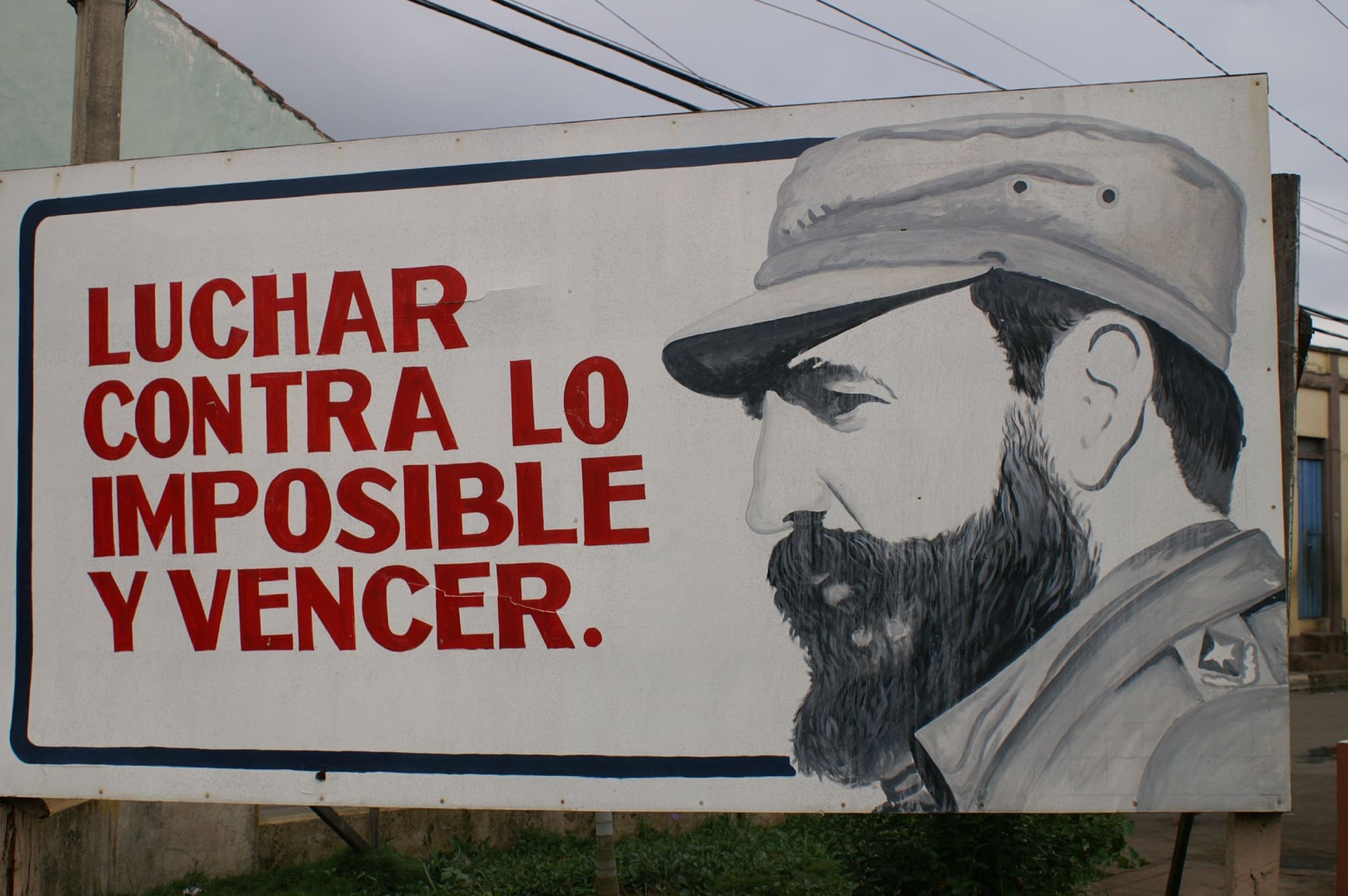
Cuban humanitarian cooperation also rests on ideological principles drawn from Cuban nationalism. Indeed, the cooperants I met during my field research mentioned that Cubans had “the duty” to help other countries of the world since their nation, strongly mixed, was born from the contributions of different peoples who settled on the island over time (Grenon, 2016). In addition, during the long march toward independence from Spain, Cuban fighters received the support of several foreign volunteers who helped them achieve political sovereignty. Among them was the American Henry Reeve, whom Fidel Castro chose to honor, not without irony, by giving his name to the emergency relief brigade specialized in natural disasters and epidemics. Created in 2005, the Henry Reeve brigade is made up of doctors and health professionals specially trained to intervene in a humanitarian aid context. Over the past fifteen years, the medical contingent has assisted more than 3.5 million people in over twenty countries, including in Haiti following the earthquake (2010), in West Africa during the Ebola epidemic (2014) and now in Italy in the face of the COVID-19 pandemic (PAHO, 2017). In 2017, the Henry Reeve International Medical Brigade received the WHO Dr Lee Jong‑wook Award for its outstanding contribution to public health.
The aid offered by the Henry Reeve brigade relies on two pillars of the 1959 revolution: health and internationalism. At the turn of the 1960s, the Cuban government established access to health care as an inalienable human right to be offered free of charge and universally. Over the decades, the Cuban state trained significant numbers of doctors, built hospitals and developed a comprehensive health system that emphasizes prevention. In his work, Brotherton (2012) showed in particular that Cubans had internalized the state's discourse on health, while remaining attentive to their needs and well‑being, despite the economic difficulties inherent to the post‑Soviet period. The sustained commitment of the Cuban government to the health sector has notably made it possible to reach a ratio of 8 doctors per 1,000 inhabitants, making it one of the best in the world (Index Mundi, 2019).
Internationalism was established as a guiding principle of Cuban international relations following the revolution. It is a policy based notably on Cuban nationalist ideology and on the thought of the national hero José Martí who valued, among other things, solidarity between peoples. In the Cuban context, internationalism essentially denotes the sharing of its social successes, especially in health and education, with countries that need them. Over the decades, Cuba has provided health aid to more than 70 countries worldwide (Feinsilver, 2010).
The COVID-19 pandemic affects all countries of the world, and there is reason to worry about the more vulnerable states that do not have the medical and health structures to deal with the spread of the disease. Since the start of the pandemic, the Cuban state has shown itself willing to cooperate with affected countries by deploying the Henry Reeve medical brigade. While the US government has called for rejecting Cuban aid, it appears that real international collaboration will nonetheless be necessary to confront the crisis.
Bibliography
BROTHERTON, P.S., 2012, Revolutionary Medicine: Health and the Body in Post-Soviet Cuba, Durham, Duke University Press.
CIA, 2019, The World Factbook, online, https://www.indexmundi.com/map/?v=2226&l=es (page consulted March 24, 2020).
FEINSILVER, J., 2010, “Fifty Years of Cuba’s Medical Diplomacy: from Idealism to pragmatism”, Cuban Studies, 41:85–104.
GRENON, MM., 2016, “Cuban Internationalism and Contemporary Humanitarianism: History, Comparison and Perspective”, International Journal of Cuban Studies, 8, no. 2:200–216.
PAHO, 2017, “Cuba’s Henry Reeve International Medical Brigade receives prestigious award”, Regional Office for the Americas of the World Health Organization, online, https://www.paho.org/hq/index.php?option=com_content&view=article&id=13375&Itemid=42353&lang=en (page consulted March 25, 2020)