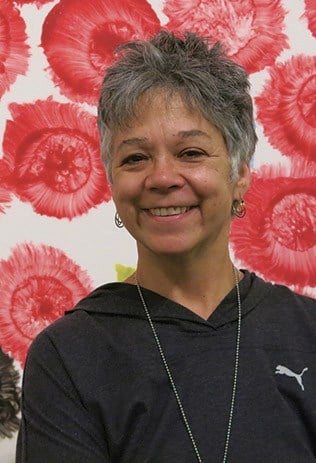
Dr. Francine Saillant, recipient of the 2021 Weaver-Tremblay Award Weaver-Tremblay Award Winner: Dr. Francine Saillant
Cultureblog
(English follows)
We are privileged to announce that we will be presenting to Professor Francine Saillant, of Laval University, the Weaver-Tremblay Award at the CASCA 2021 Congress in Guelph. This award in applied anthropology in Canada was created in honour of two Canadian luminaries in applied anthropology, namely Sally Weaver and Marc-Adélard Tremblay. It is one of CASCA’s most prestigious awards, a well-deserved honour for Francine Saillant.
A pioneer in many fields, she has carried out work that has had a major impact on the societies studied, on researchers in the social sciences and humanities, and on the next generation of students. Her health research has led to several transformations of the healthcare system, greater recognition of caregivers’ work, the creation of a database unique in Canada on folk medicines, and the recognition in Quebec of certain alternative therapies. Note here the impact that, among others, her books have had Cancer et Culture, Accoucher autrement and Au cœur de la baleine.
Her work on humanitarianism and rights has brought new insights into societal concerns related to reparations. She is interested in the recognition of the rights of people living with disabilities, refugees, and people of African descent. Her book « Le mouvement noir au Brésil 2000-2010 » is the first comprehensive empirical study on the notion of reparations with regard to the consequences of slavery through the Black Movement in Brazil. In Quebec, she continues her research with the InterReconnaissances project, which traces the memory-bearers of the movement of community groups that fought for social rights in Quebec. A travelling exhibition resulted from it.
Through her research, Francine Saillant pushes the reflective boundaries of the discipline by developing the idea of a non-hegemonic anthropology that aligns with her epistemological and social concerns, among other things with The Lausanne Manifesto, and set up the first online dictionary of contemporary anthropology Anthropen. In addition, she develops new dissemination media by producing several films, exhibitions and creative workshops that have in recent years led her to develop a new collaboration between art and anthropology, the artist and the anthropologist that she is. Ever concerned with social justice and the recognition of differences, she is currently working on projects to promote artistic initiatives developed within community mental health settings, notably with the Cervo Research Centre, and with cultural diversity. Créateurs de liens and Apparaître, films which she co-directed, are an outgrowth of these endeavors. Together with the CERVO Centre, she is collaborating on a project to promote memory, art, scientific initiatives and de-stigmatization efforts in the field of mental health.
From the beginning, Francine Saillant has chosen the path of collaboration for all her research, within the academic milieu with colleagues and students, with organizations and associations working at the very heart of the issues studied, and with artists who bring a complementary sensibility to the understanding of current phenomena. Many of the achievements mentioned here have been carried out collaboratively.
We would like to thank her for what she has accomplished for CASCA. Not only is her contribution to society invaluable, but her mentorship has contributed to the emergence of an entire generation of anthropologists devoted to CASCA and to Canadian anthropology.

It is our privilege to announce that we will be presenting Dr Francine Saillant from Laval University with the Weaver-Tremblay Award during the CASCA 2021 Virtual Conference at Guelph. This award in Canadian Applied Anthropology was named in honour of two of Canada’s most distinguished applied anthropologists, the late Sally Weaver and the late Marc-Adélard Tremblay. It is one of CASCA’s most prestigious awards, and Professor Saillant is more than deserving of it.
A pioneer in numerous fields, Francine has conducted research that has had a major impact on the societies she has studied, on researchers in the social sciences and humanities, and on countless students. Her health research has led to several significant changes in the healthcare system, greater recognition of caregivers, the creation of a folk medicine database that is the only one of its kind in Canada, and the recognition in Quebec of certain complementary and alternative treatments. The impact of her books Cancer et culture, Accoucher autrement and Au cœur de la baleine, among others, cannot be overstated.
Francine’s work on humanitarianism and human rights has shed new light on societal concerns related to reparations. Her focus areas have included the recognition of the rights of people with disabilities, refugees, and people of African descent. Her book Le mouvement noir au Brésil 2000-2010 is the first comprehensive empirical study on the notion of reparations in connection with the consequences of slavery through the lens of the Black Movement of Brazil. In Quebec, her research has continued with the InterReconnaissances project, which addresses the memory bearers of the movement of community groups that have fought for social rights in Quebec and has resulted in the launch of a travelling exhibition.
Through her research, Francine has pushed back the boundaries of the discipline by developing the idea of a non-hegemonic anthropology, which gives expression to her epistemological and social concerns and is set out in her book The Lausanne Manifesto, among others. She also launched the first online dictionary of contemporary anthropology, Anthropen . Additionally, she has developed new distribution media in the form of a number of films, exhibitions and creative workshops that have in recent years led her to develop a new collaboration between art and anthropology, the artist, and the anthropologist that she is. Ever seeking to advance social justice and the recognition of difference, Francine is currently working on various projects that highlight artistic initiatives developed within community mental health settings, including with the Cervo Brain Research Centre, as well as with culturally diverse communities. The films Créateurs de liens and Apparaître, which she co-directed, are an outgrowth of these endeavors. Together with the CERVO Centre, she is currently collaborating on a project celebrating memory, art and scientific and de-stigmatization efforts in the mental health field.
Francine has always opted for a collaborative approach to her research, within her academic milieu, i.e., with colleagues and students, as well as with organizations and associations working on the front lines of the issues under study. She has also adopted a collaborative approach with artists who contribute a complementary sensitivity to understanding topical phenomena. Many of the accomplishments cited here have been collaborative initiatives.
We would also like to express our gratitude for all the service that she has done for CASCA. Not only have her contributions been invaluable to our society, but her mentorship has created an entire generation of anthropologists committed to CASCA and Canadian anthropology.